
WINTER STRUCTURAL ADVOCACY • MI | OH | IN
Weight of Ice & Snow Roof Collapse Recovery
Accumulated snow drifts, ice dams, and heavy freeze cycles place extreme downward tonnage on commercial roofs and residential framing. Sharp Indemnity Group conducts forensic structural load audits, truss deflection measurements, and complete interior scope valuations to protect policyholders when winter weather compromises structural integrity.
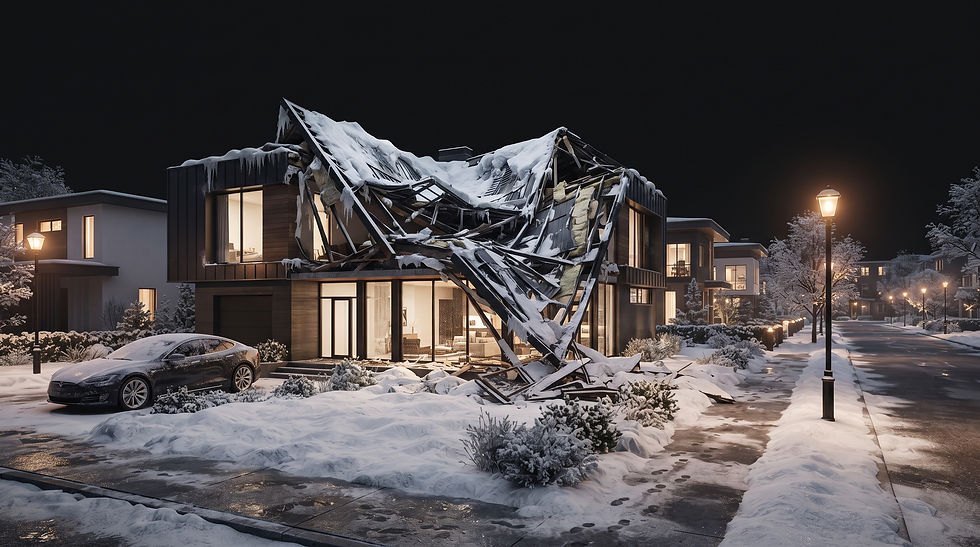
How does Sharp Indemnity Group handle weight of ice and snow roof collapse claims?
Sharp Indemnity Group executes a four-part forensic winter loss assessment: measuring structural truss deflection and shear stress, auditing ice dam water migration into interior envelope cavities, verifying local snow load building code compliance, and building a line-item Proof of Loss for full reconstruction. Operating throughout Michigan, Ohio, and Indiana, the firm protects commercial property owners and estate clients against carrier defenses regarding maintenance neglect or pre-existing structural weakness.
The 4-Pillar Structural Impact Framework
-
Structural Truss Deflection & Shear Load
Heavy snow accumulation does not always cause an immediate total drop; it often causes structural framing, steel purlins, or wooden trusses to bend beyond safe design tolerances (deflection). Insurance adjusters routinely dismiss bowed trusses as minor settlement. We deploy structural engineers to measure deflection ratios and fastener shear, proving structural failure that requires full frame replacement.
-
Ice Dam Backup & Hidden Envelope Intrusion
Thaw-freeze cycles create thick ice dams along roof eaves, trapping gallons of water behind the ice ridge. This water forces its way under commercial roofing membranes or residential slate/shingles, saturating ceiling joists, insulation, and wall cavities. We track the full moisture migration path to ensure the claim covers complete interior tear-out and drying rather than superficial painting.
-
Defending Against "Maintenance Defenses"
Carriers frequently attempt to deny snow load claims by asserting the building suffered from deferred maintenance, aged roofing materials, or improper drainage. Our team engages forensic meteorologists to calculate exact snow weight per square foot (ground and drift loads) during the storm event, legally establishing that extreme weather was the proximate cause of failure.
-
Drift Load Calculations & Mandatory Code Upgrades
Uneven snow accumulation caused by wind creates localized drift loads that exceed standard building design limits. When a portion of a roof collapses, local municipal building codes often mandate that the entire roofing system be upgraded to higher snow load ratings. We enforce your policy's Ordinance or Law provisions so the carrier pays for these required structural upgrades.
Tri-State Winter Peril Directory
Michigan (HQ)
Primary Winter Loss Factors
Lake-effect snow accumulation, severe ice damming in Kalamazoo, Grand Rapids, & Upper Peninsula commercial corridors.
State Statutory & Policy Focus
MCL § 500.2833; strict enforcement of winter collapse coverage definitions and building code upgrade endorsements.
Ohio
Primary Winter Loss Factors
Heavy wet snow events, freeze-thaw cycles impacting industrial logistics centers in Cleveland, Toledo, & Columbus.
State Statutory & Policy Focus
Ohio Administrative Code claim handling requirements; defense against improper "gradual wear" denial arguments.
Indiana
Primary Winter Loss Factors
High-tonnage snow drifts on commercial flat roofs, multi-family housing structural failures in South Bend, Fort Wayne, & Indianapolis.
State Statutory & Policy Focus
IC § 27 guidelines; enforcement of full replacement cost value for structural framing and interior finish restoration.